
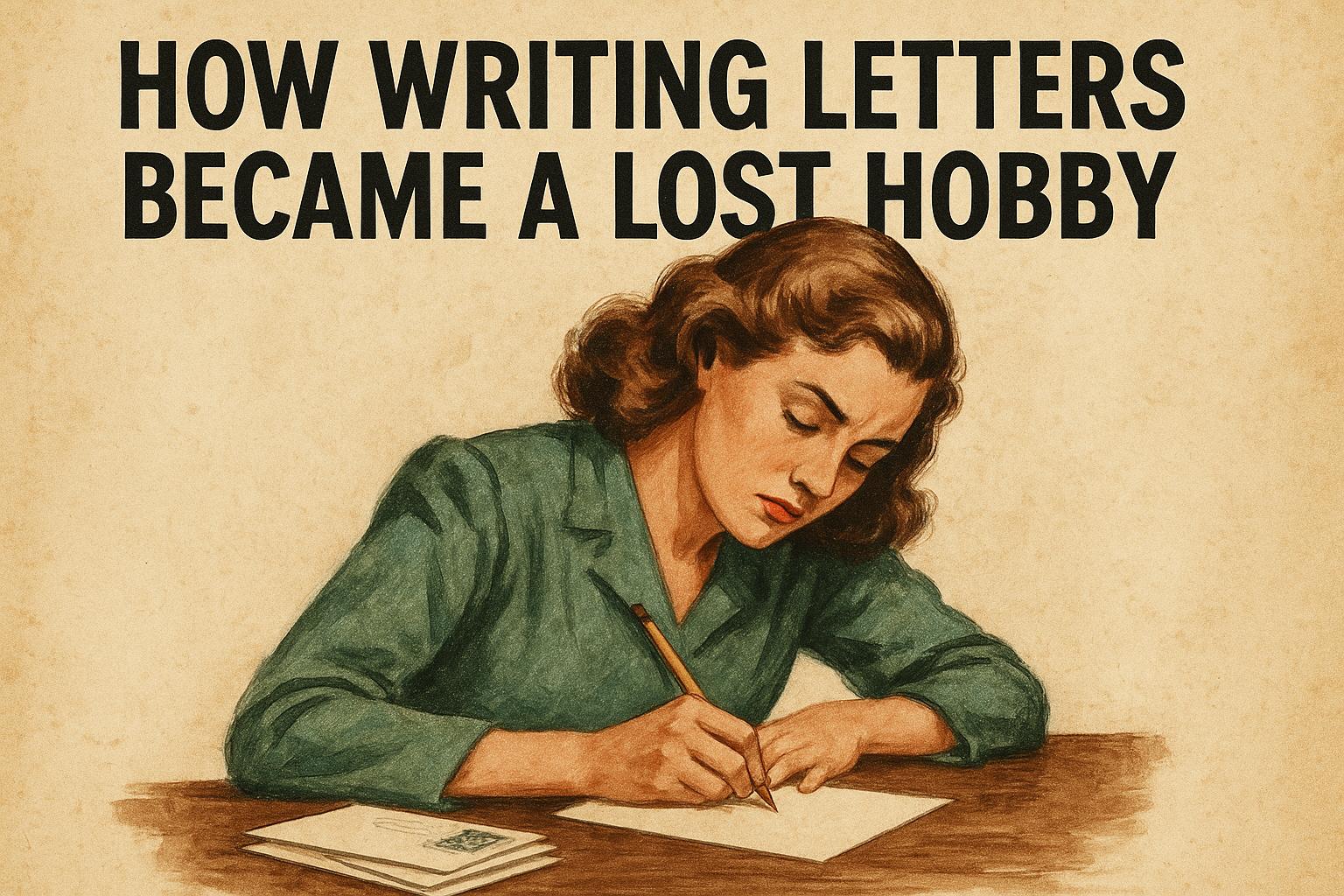
The Decline of Letter Writing
In the age of rapid technological advancements, traditional letter writing has seen a marked decline, transforming from a primary communication method into a niche hobby. With the advent of digital communication technologies—such as email, instant messaging, and social media—the landscape of personal correspondence has shifted significantly. These digital methods offer instantaneous communication and convenience, which are irresistible in today’s fast-paced world. As a result, the practice of putting pen to paper has largely receded from everyday life. The evolution from letters to digital messages not only signifies a change in technology but also reflects broader societal shifts.
Historical Context of Letter Writing
Historically, letter writing once held great importance as a means of communication. Before the modern conveniences of telephones and the internet, letters were the primary way for individuals to correspond over distances, whether to maintain personal relationships or to conduct official business. The legacy of figures like George Washington and Jane Austen, both of whom left behind rich collections of correspondence, underscores the historical significance of this medium. Their letters offer valuable insights into their personal lives and the broader historical context of their times. Letters were not just tools of communication but were artifacts of personal expression and documentation, capturing nuances and intricate details of life that other forms of communication could not.
The Transition to Digital Communication
The transition from handwritten letters to digital communication has been swift and pervasive. In the late 20th century, the internet revolutionized the way information and communication were exchanged. Email, one of the first digital communication technologies, offered a new means of sending messages that were quick and cost-effective. The rise of text messaging and social media platforms further eroded traditional letter writing by providing even more immediate and interactive methods of staying connected. This was coupled with the convenience and speed that digital communication offered, further accelerating the rate at which people adopted these new technologies.
The Impact on Society
The shift toward digital communication methods has had profound effects on society. On one hand, it has enhanced connectivity on a global scale, allowing individuals to communicate more rapidly and effortlessly than ever before. The ability to send messages across vast distances in a matter of seconds has brought people closer together, regardless of geographical barriers. On the other hand, this transition has also led to a subtle yet significant loss of personal touch. Handwritten letters, with their unique style of handwriting, choice of paper, and personal signatures, often conveyed emotions and sentiments in a way that digital messages cannot typically replicate. These tangible elements of personal correspondence, which added depth and warmth to communication, are often lost in the digital realm.
The Resurgence of Analog Hobbies
Despite the overwhelming presence of digital communication, there is a minor yet intriguing resurgence of interest in letter writing as part of a broader revival of analog experiences. This emerging trend sees individuals rediscovering the joy and significance of sending and receiving handwritten letters. Motivated by a desire for more tangible and meaningful forms of interaction, some people are returning to paper and pen as a way to disconnect from the fast-paced digital world and reconnect with the art of deliberate communication. Services like letter writing services and pen pal organizations facilitate this revival by helping individuals connect through traditional methods, often providing a refreshing alternative to the immediacy of digital correspondence.
The resurgence of letter writing, although modest, highlights a broader longing for more tangible interactions in a digitized world. While letter writing may never regain its historical prominence, it offers a unique appeal to those who value its tangible and personal characteristics. Handwritten letters can serve as keepsakes, capturing the essence of a person’s thoughts and emotions in a way that digital communication often lacks. As society continues to embrace the efficiency and convenience of digital technologies, the art of letter writing may continue to serve as a poignant reminder of a slower, more deliberate means of communication.
In conclusion, while digital communication has indisputably transformed the way people connect, it is essential to recognize and appreciate the enduring value of traditional letter writing. The practice represents a form of creative expression and a tangible connection to the past that digital communication methods, in their efficiency, sometimes overlook. As people continue to explore and appreciate the art of letter writing, they contribute to preserving a timeless tradition that provides a unique and deeply personal dimension to human interaction.