
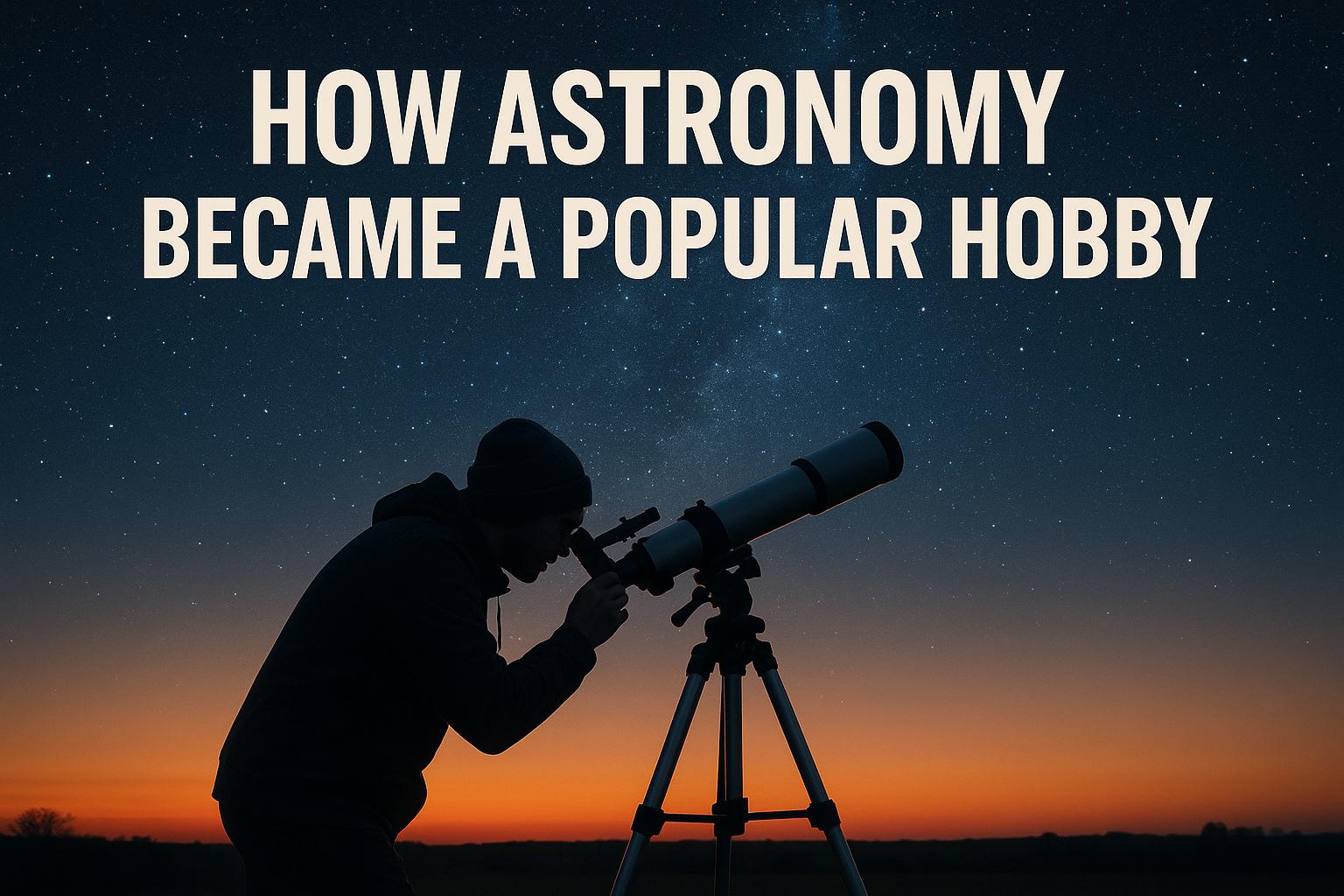
The Evolution of Astronomy as a Popular Hobby
Astronomy has captivated the human imagination for centuries, and in recent years, it has become an increasingly popular pastime. Its rise can be attributed to numerous factors, including historical contexts, technological advancements, readily accessible information, and educational efforts. This exploration of how astronomy has evolved into a widely enjoyed hobby provides an understanding of the intricate web of developments leading to its present-day appeal.
The Historical Background
Humanity has long been fascinated with the stars. Ancient cultures have left behind rich records of their celestial observations and beliefs. The Babylonians, for example, meticulously recorded celestial events, predicting solar and lunar eclipses—a clear indication of their advanced understanding of astronomy. Similarly, the Egyptians used stars to guide their agricultural calendars, aligning their structures like the pyramids with celestial bodies. The Greeks contributed profoundly to astronomical knowledge. Thinkers such as Ptolemy built on previous observations to develop theories that described the motion of stars and planets in mathematical terms.
The turning point came with the invention of the telescope in the early 17th century. This device revolutionized astronomy, turning it from a philosophical endeavor to a scientific discipline. Figures like Galileo Galilei and Johannes Kepler used telescopes to discover new celestial bodies and to validate heliocentric models of the solar system. These efforts laid down a firm foundation for modern astronomy, establishing techniques and methods still in use today.
Technological Advancements
Modern technology has made it feasible for amateurs to delve into astronomy. The evolution of telescopes is a significant factor; they are now more powerful, portable, and affordable than their earlier counterparts. The advent of computerized telescopes has provided amateur astronomers with enhanced capabilities, such as tracking celestial objects automatically. Meanwhile, astrophotography has become more accessible, allowing hobbyists to capture stunning images of galaxies, star clusters, and nebulae.
Additionally, computer software has significantly augmented the stargazing experience. Programs such as Stellarium and Starry Night enable enthusiasts to simulate the night sky, adjusting for location and time, making real-time stargazing more informative. Augmented reality apps for smartphones offer users a dynamic interface to learn about constellations and planets visible in the sky, thus enriching the amateur astronomer’s experience further.
Accessibility of Information
The role of the internet cannot be overstated in the popularization of astronomy. Online platforms provide an enormous repository of information at one’s fingertips. Enthusiasts can join global communities, participate in forums, and exchange knowledge and experiences. Resources like NASA’s website or platforms such as the European Space Agency offer continual updates about space missions and discoveries. These insights spark curiosity and foster a deeper understanding of celestial phenomena.
Educational resources are readily accessible online for all skill levels, from beginner to expert. Detailed guides and courses on observational techniques, courses on theoretical astrophysics, and updates on latest research findings are all a click away. This wealth of readily available knowledge makes it easier than ever for anyone to start their astronomical journey.
Educational and Cultural Factors
Educational moves have also played their part. Many schools and universities have integrated astronomy into their curricula, stimulating interest among younger generations. Astronomy clubs offer students the chance to engage with the subject outside of classroom restrictions, providing practical experiences that deepen their learning. Field trips to planetariums and observatories help demystify complex astronomical ideas, making them more tangible to the layperson.
Public outreach programs conducted by these institutions aim at involving the community in astronomical activities. Workshops, seminars, and star parties where members of the public can observe the night sky through powerful telescopes help break down barriers, turning the night sky into an open book accessible to all. These initiatives encourage lifelong learning and provide a foundation for appreciation of the universe.
The Influence of Media
Media, in many forms, has been pivotal in making astronomy appealing to the masses. Television programs and documentaries bring the wonders of the universe into our living rooms. Shows dedicated to space exploration, the history of the universe, and prominent figures in astronomy not only entertain but educate viewers on fundamental concepts of the cosmos.
Movies that explore themes of space exploration, such as fictional representations of future space travel and historical depictions of missions like the Apollo program, spur interest and lead to greater inquiry. Social media platforms permit widespread dissemination of astrophotography, showcasing awe-inspiring images of celestial events like eclipses, meteor showers, and conjunctions, which invigorate public enthusiasm. Real-time updates and live streams of significant astronomical occurrences promote community participation and collective excitement about observing such events.
Conclusion
In summation, astronomy as a hobby has gained momentum through a blend of historical attention, technological innovation, the democratization of information, and cultural initiatives. Each of these aspects contributes wholly to the resurgence of interest in celestial phenomena. As technology continues to evolve and our understanding of the cosmos expands, it seems likely that astronomy will continue to flourish as a beloved hobby, drawing in new enthusiasts who are eager to explore the universe and its myriad mysteries. The boundless skies promise endless discoveries for those willing to concentrate their gaze and learn what secrets the night can yield.